
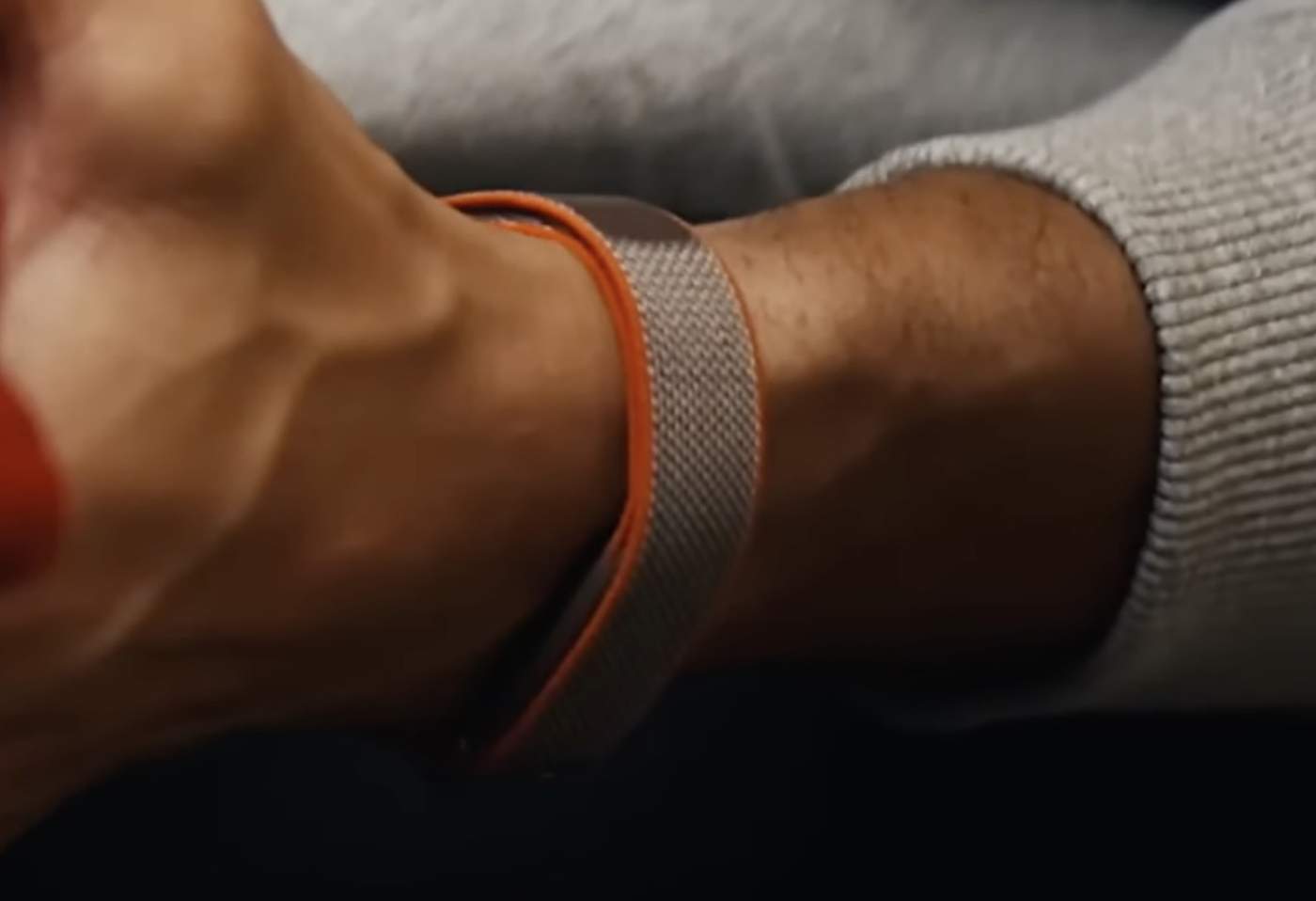

Google and Fitbit are about to enter the screen-less or screen-free device space for fitness and health tracking. This is a space dominated by WHOOP (on the wrist) and Oura (on the finger), with other newer players joining the party within the past couple of years. Companies like Amazfit and Polar come to mind for wrist-based devices, while Samsung and countless others have made smart rings.
For Fitbit to give this segment a try, it’s clear that this is a growing area for fitness tracking. People like the idea of fitness trackers that aren’t another screen, don’t need to be charged as often, and can typically sit on a wrist (or finger) without taking up as much space as a smartwatch, all while tracking everything you need them to.
I happen to be a big fan of these types of devices (I wear both a WHOOP and Oura Ring, I’m weird) and have already mentioned how excited I am to test out the Fitbit Air, which sure looks to be the device that Google will release within the coming weeks. We first saw it teased by Steph Curry at the end of March, but we’ve followed that up with a deeper dive into how long he’s been wearing it and then outed color and band options, as well as a potential price. And that last thing (the price) brings us to a conversation that could go several ways.
If Google were to price the Fitbit Air at $99, but then force you into a monthly subscription to unlock all of its features, are you willing to pay for that?
As I mentioned earlier, WHOOP and Oura are at the top of this screen-free category and both have somewhat differing price models. For WHOOP, the entire situation is subscription-based, while Oura asks you to buy a ring and then also charges a subscription on top of it.
WHOOP vs. Fitbit Air
If you want to join WHOOP, you sign-up for 1 of 3 subscriptions, pay for it per year, and they send you a device as a part of that subscription. You can subscribe for multiple years and receive a bit of a discount. But again, you don’t directly buy the WHOOP band, it’s just included with your subscription. That means you can’t just pay off your WHOOP device and then enjoy its app and tracking. In order to use WHOOP, you have to have an active subscription.
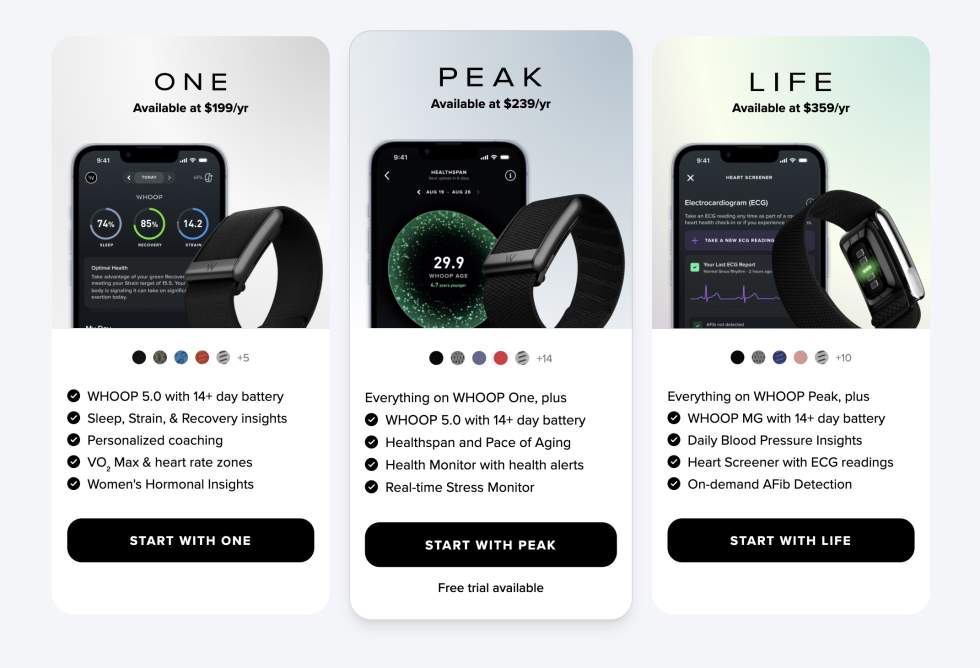
WHOOP memberships start at $199 (ONE) per year and then increase to $239 (PEAK) and $359 (LIFE) per year, depending on the level and device type. The top LIFE subscription gets you a special WHOOP MG band that can offer blood pressure insights, heart screenings with ECG readings, and on-demand AFib detection. You can view all of their subscriptions here.
I was a WHOOP subscriber for years, took a break for a couple, and then recently picked up a WHOOP MG (LIFE subscription on big discount for Black Friday). This thing is awesome, really does last close to 2 weeks before I need to charge it, takes some really cool advanced metrics, and gives me access to WHOOP’s excellent app. It’s absurdly expensive, though.
For most people, WHOOP is just too expensive when there are other devices that don’t charge a subscription at these rates.
Oura Ring vs. Fitbit Air
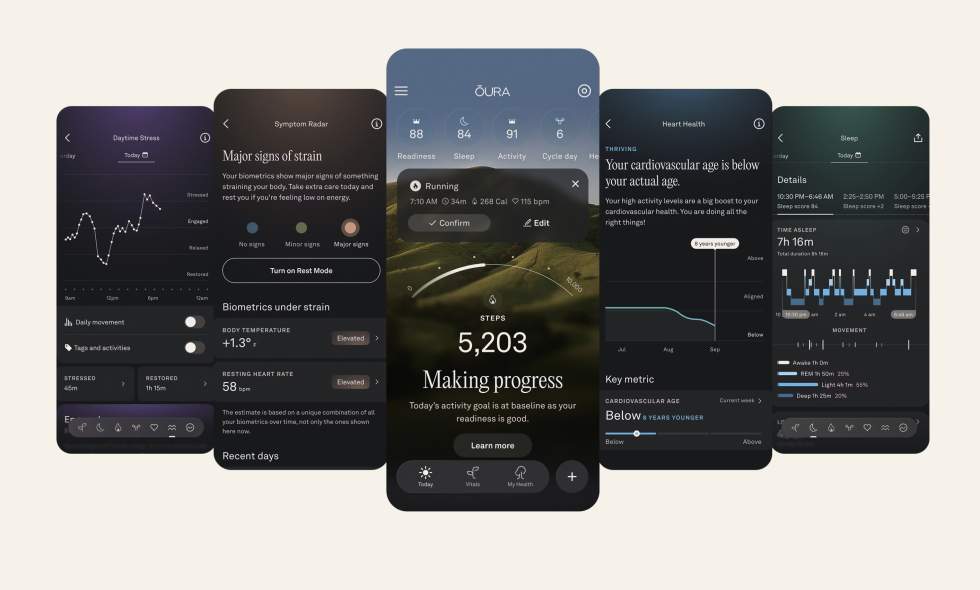
For Oura, the model is very different. You buy a ring first (currently Oura Ring 4), with starting prices at $349 and topping out at $499. Then on top of that device price, you’ll pay $5.99 per month (or $69.99 for a year) for an Oura Ring Membership. Oura suggests you can still get “limited” information without most of the insights, personal health data, and other benefits if you don’t want to pay for a Membership. That mostly boils down to receiving Readiness, Sleep, and Activity scores without much extra data.
The Oura app is regularly updated and is very nice. Like with WHOOP, the app is the experience, since the device itself has no screen. Oura is constantly pushing new features and refining their app.
Non-subscription options – Amazfit Helio Strap, Polar Loop
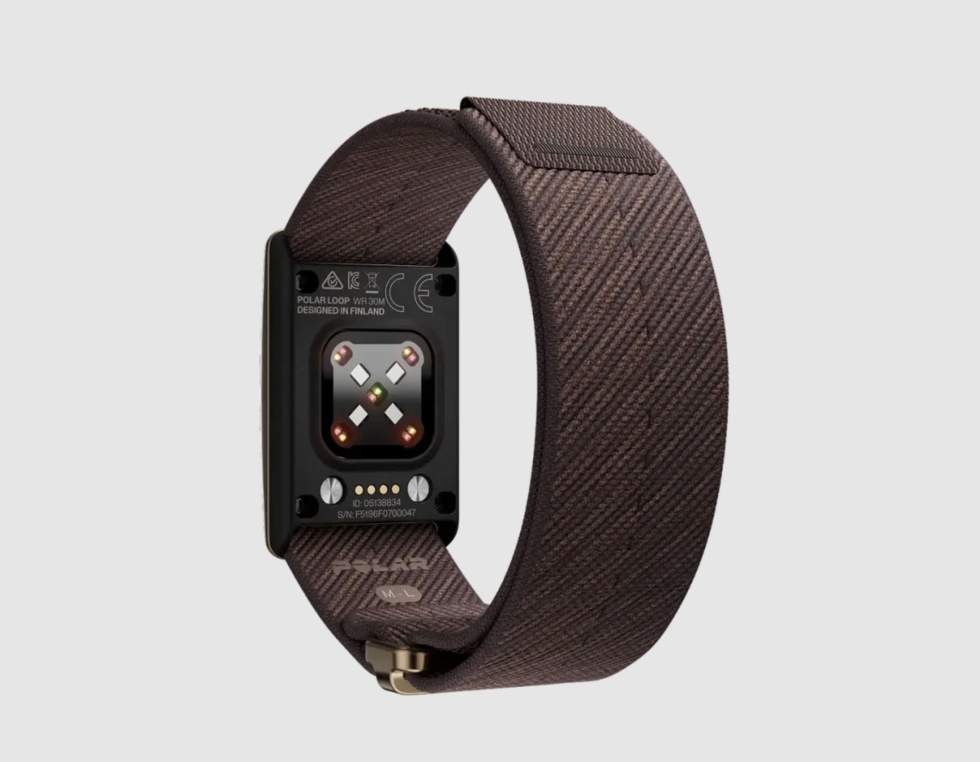
If those two options don’t sound appealing because they have subscriptions tied to them, then there are a couple of others to know about. Amazfit’s Helio Strap and the Polar Loop are two choices where you buy the device and then get whatever health tracking insights these companies offer without a subsription.
The Amazfit Helio Strap costs $99.99 and is pitched as “providing deep health insights without the hassle of subscriptions.” The Polar Loop costs $199.99 and is “a screen-free, subscription-free fitness band.” Both devices track the typical health stuff like sleep, readiness, 24/7 heart rate and stress, workouts, steps, etc. They might not be as advanced as WHOOP or Oura, but they’ll certainly get the job done and you don’t have to continue paying for them.
I tested the Helio Strap when it first came out and the Zepp app that it connects too was not my favorite. The strap also constantly attempted to track activities throughout a day and frustrated me deeply. It lasted on my wrist about 3 days. It may have improved greatly since, though. I have not yet tested the Polar Loop, but may try it out at some point.
Fitbit Air pricing, subscription
All of that aside, we come back to the upcoming Fitbit Air. For now, Google has not confirmed the name of this device, when it will come out, or how it will be priced. However, leaks and early information that we’ve uncovered can at least allow us to predict.
Information we’ve viewed could put the Fitbit Air right around $100. That price doesn’t sound unreasonable for a screen-less device. The Amazfit Helio Strap is priced right there, plus Fitbit already sells the small Inspire 3 band for $99.95. You can add-on a Fitbit Premium subscription with the Inspire 3 for access to workouts and more.
Since the Fitbit Air won’t have a screen, you will need to use the Fitbit app for everything it tracks. And since Fitbit already offers a Fitbit Premium subscription for other devices, including its Pixel Watch line, it only makes sense that they would do the same for this device.
Currently, Fitbit offers a decent amount of information without a subscription, but Fitbit Premium gets you more details on sleep scores, sleep profiles, mindfulness sessions, and overall a more “personalized” fitness journey.
Fitbit Premium costs $9.99 per month, but Fitbit often offers multiple months of free access when you buy a device.
If I were a betting man, I’d assume a $99.99 price for the Fitbit Air and then heavy recommendation from Google to subscribe to Fitbit Premium for $9.99 per month to get the most out of it. They also may end up calling it Google Health, but you get the idea.
In the end, Fitbit Air could follow the Oura Ring model of selling a device and adding on a subscription, only the Fitbit Air should be substantially cheaper.
You cool with that?