


The number of days before Google brings us new phones to obsess over are dwindling quickly. Assuming Google keeps to a familiar timeline for Pixel releases, the Pixel 11 series should arrive before the end of the summer and we’re already into June.
Thanks to numerous leaks, we know that Google is continuing with its multi-device strategy, prepping four models for later this year, just like they have as far back as the Pixel 9 series. When August rolls around, there is a high likelihood that we get the Pixel 11 (codename cubs), Pixel 11 Pro (codename grizzly), Pixel 11 Pro XL (codename kodiak), and the foldable Pixel 11 Pro Fold (codename yogi).
While the potential for major hardware upgrades are unlikely, there still may be reason to consider buying one. Let’s dive into everything we know about the Pixel 11 series so far.
Release Date and Expected Pricing
From the moment Google moved its hardware event up to the summer, Google now slides in-between Samsung and Apple launches, rather than awkwardly arriving after both. Google is running back that exact same timeline this year, meaning an August launch is happening on August 12 for the Pixel 11. The Pixel 9 was announced on August 13 and the Pixel 10 landed on August 20.
| Model | Announcement Date | Release Date |
| Pixel 9 Series | August 13, 2024 | August 22, 2024 |
| Pixel 10 Series | August 20, 2025 | August 28, 2025 |
| Pixel 11 Series | August 12, 2026 | August 2026 |
On the pricing front, early reports suggested Google was looking to maintain stability. However, new information contradicts that. If the prices held from the Pixel 10 series, we will see a mixture of price increases and stability, as well as RAM downgrades on some models.
Following rumored pricing for Europe that first arrived, we now have likely official pricing, thanks to a retailer showing us all of those details early. There are plenty of increases to be mentioned.
| 256GB | 512GB | 1TB | |
| Pixel 11 | $899 | $1,019 | X |
| Pixel 11 Pro | $1,099 | $1,219 | $1,449 |
| Pixel 11 Pro XL | $1,299 | $1,419 | $1,649 |
| Pixel 11 Pro Fold | $1,899 | $2,019 | $2,249 |
The Pixel 11 will stay at $899 for 256GB, which is now the starting storage. 128GB models appear to be gone for 2026. The Pixel 11 will also get a new 512GB option in the US.
The Pixel 11 Pro may not see a single price increase on any storage variant, but again, there will be no 128GB model. The lowest tier will be the $1,099 256GB Pixel 11 Pro.
For the Pixel 11 Pro XL, we are looking at $100 increases to every storage option from 256GB up through 1TB.
Finally, for the Pixel 11 Pro Fold, each storage option (256GB, 512GB, and 1TB) will see $100 price increases.
Design and Display

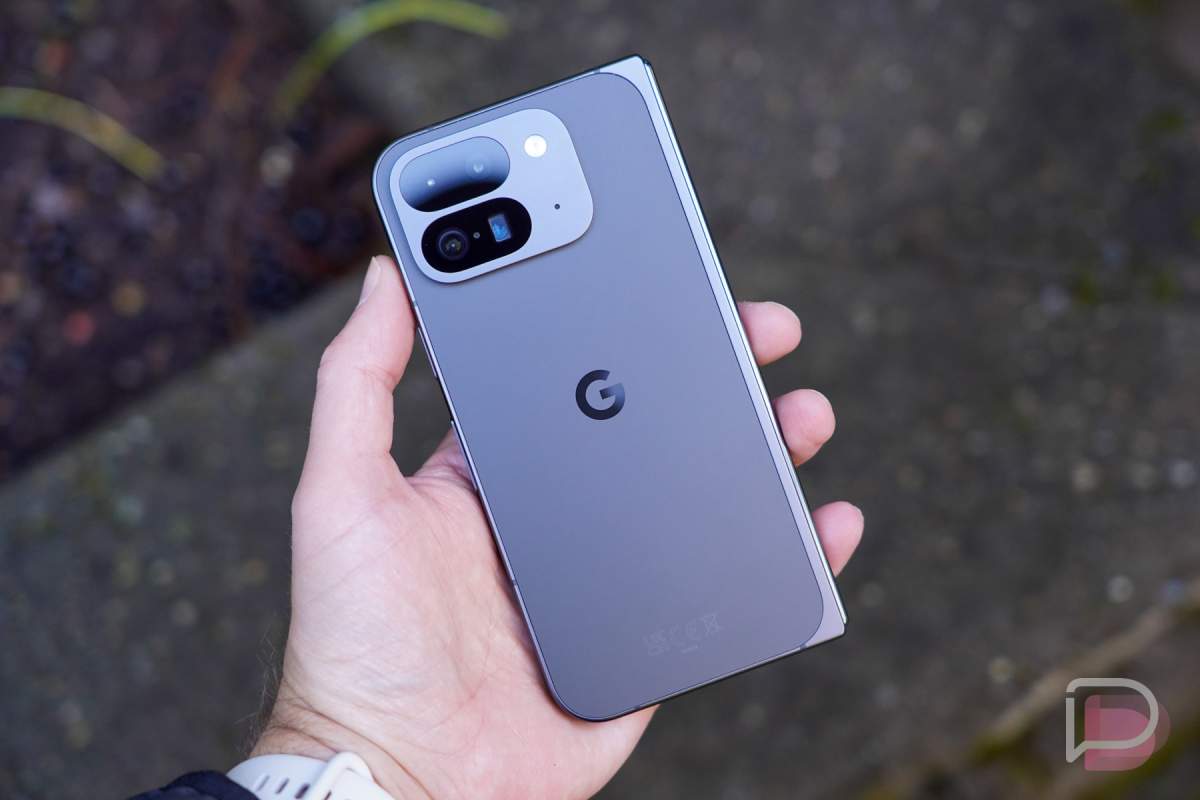
The Pixel 11 series will largely iterate on the hardware identity that Google first kicked off with the Pixel 9 series and continued through the Pixel 10. However, initial CAD renders indicate that the camera bar is seeing a subtle facelift. While previous models featured a frame color that wrapped around the lenses, supposed renders show a completely blacked-out camera housing, giving the rear array a cleaner look.
There is a rumored Pixel Glow lighting system that could wrap behind the camera bar too, but we’ll get into that later.
As for specific sizes, these shouldn’t change much either, and we expect each model to measure in as follows:
- Pixel 11: 152.8 x 72 x 8.5mm
- Pixel 11 Pro: 152.7 x 71.8 x 8.4mm
- Pixel 11 Pro XL: 162.7 x 76.5 x 8.5mm
- Pixel 11 Pro Fold (unfolded): 155.2 x 150.4 x 4.8mm
- Pixel 11 Pro Fold (folded): 155.2 x 76 x 10.1mm
With sizes in mind, the display tech (likely) should be familiar, with subtle improvements to peak brightness and not much else. Here’s how the display size and tech breaks down by model across the entire family:
| Model | Screen Size | Resolution | Refresh Rate | Brightness |
| Pixel 11 | 6.3″ OLED | 1080 × 2424 | 60–120Hz | 2200 nits |
| Pixel 11 Pro | 6.3″ OLED | 1280 × 2856 | 1–120Hz LTPO | 2450 nits |
| Pixel 11 Pro XL | 6.8″ OLED | 1344 × 2992 | 1–120Hz LTPO | 2450 nits |
| Pixel 11 Pro Fold | 6.3″ OLED Outer / 8.0″ OLED Inner | 1080×2342 / 2076×2160 | 60 – 120Hz (Outer) / 1–120Hz (Inner) | 2050 nits (inner) / 2450 nits (outer) |
Outside of the camera bar changes, you can see from everything else we know today that these will be very familiar. We’ve also seen what each device should look like (Pixel 11, Pixel 11 Pro, Pixel 11 Pro XL, and Pixel 11 Pro Fold).
In a recent slip-up, Amazon posted all of the devices early, giving us official renders of all devices and the colors they’ll ship in.

The Pixel 11 can be seen above in Frost, Pistachio, Hibiscus, and Obsidian.

The Pixel 11 Pro and 11 Pro XL can be seen above in Olive, Obsidian, Canyon, and Fog.
Finally, below is the Pixel 11 Pro Fold in Obsidian and Olive.

If you had questions about all of those images being legitimate, Google posted one of the Pixel 11 Pro in “Canyon” that we captured. You can see it here.

Tensor G6
In the processor department, Google is expected to be moving to the Tensor G6 processor, and for silicon nerds, this could be a big one. The Tensor G6 will be built on TSMC’s N2 (2nm) node process. The 2nm node is expected to bring improvements in thermal efficiency, battery endurance, and performance over previous Tensor chips.
A massive leak revealed the exact CPU layout for the Tensor G6:
- 1× ARM C1-Ultra clocked at a blistering 4.11 GHz
- 4× ARM C1-Pro clocked at 3.38 GHz
- 2× ARM C1-Pro clocked at 2.65 GHz
That same leak also suggested the entire system-on-chip architecture is getting an overhaul. The Pixel 11 series chip upgrade situation continues as follows:
- GPU: PowerVR C-Series CXTP-48-1536
- Modem: MediaTek M90 (MT6986D)
- Security: Titan M3 security chip
- AI & Imaging: A completely upgraded TPU (Tensor Processing Unit) alongside a brand-new GXP imaging coprocessor
As a bit of added info here, new FCC listings that we first uncovered show the Pixel 11 Pro Fold with what appears to be a MediaTek modem. Google is rumored to have switched from a Samsung Exynos modem to a MediaTek modem for Tensor G6.

This change could bring big improvements to connectivity on a Pixel series that has been plagued by spotty modems for years. It could also help with efficiency, overheating issues, and more.
Model-by-Model Breakdown: Price, RAM, Battery, and Colors
Additional specs in table format are below, with nothing looking out of the ordinary. If there is something slightly odd, it’s the suggestion from a leak that we may see RAM options depending on model or SKU.
A leak believes the Pixel 11 could get both 8GB and 12GB RAM configurations, while the Pro models could see both 12GB and 16GB RAM setups. We don’t know if that’s a RAM shortage move by Google, a country-specific thing, or something else. In comparison, the Pixel 10 had only 12GB RAM and the Pixel 10 Pro phones only had 16GB options.
If true, this could lead us to a situation where we have lower storage and RAM that keep entry points lower, followed by bigger storage options and more RAM with higher prices.
| Pixel 11 (cubs) | Pixel 11 Pro (grizzly) | Pixel 11 Pro XL (kodiak) | Pixel 11 Pro Fold (yogi) |
| $899 / $1,019 | $1,099 / $1,219 / $1,449 | $1,299/ $1,419 / $1,649 | $1,899 / $2,019 / $2,249 |
| GPQQ7 (MMW) / GUJ0N (ROW) / GV9X7 (JPN) | G7SWN (MMW) / GM45K (ROW) / G9W5D (JPN) | GBC0H (MMW) / G4HCD (ROW) / GER5L (JP) | GZDQ6 (MMW) / GM2SN (JPN) |
| Frost, Pistachio, Hibiscus, Obsidian | Olive, Canyon, Fog, Obsidian | Olive, Canyon, Fog, Obsidian | Olive, Obsidian |
| 256GB-12GB 512GB-12GB | 256GB-12GB 512GB-16GB 1TB-16GB | 256GB-12GB 512GB-16GB 1TB-16GB | 256GB-16GB 512GB-16GB 1TB-16GB |
| RAM: 12 GB | RAM: 12 / 16 GB | RAM: 12 / 16 GB | RAM: 16 GB |
| Display: 6.3″ OLED, 1080×2424, 60–120 Hz, 240 Hz PWM, up to 2200 nits | Display: 6.3″ OLED, 1280×2856, 1–120 Hz, 240 Hz PWM, up to 2450 nits | Display: 6.8″ OLED, 1344×2992, 1–120 Hz, 240 Hz PWM, up to 2450 nits | Inner Display: 2076×2160 OLED, 1–120 Hz, up to 2050 nits Outer Display: 1080×2342 OLED, 60–120 Hz, up to 2450 nits |
| Battery: 4840 mAh | Battery: 4707 mAh | Battery: 5000 mAh | Battery: 4658 mAh |
| Size: 152.8 x 72 x 8.5mm | Size: 152.7 x 71.8 x 8.4mm | Size: 162.7 x 76.5 x 8.5mm | Size: 155.2 x 150.4 x 4.8mm (unfolded) / 155.2 x 76 x 10.1mm (folded) |
Camera Systems: What’s New, What’s Gone?
Google’s camera bars are the interesting piece of the Pixel hardware experience, and this year brings a mix of rumored sensor upgrades and feature retirements.
Goodbye, Temperature Sensor
First hinted at in CAD renders and given further weight by spec leaks, the rear-facing temperature sensor is dead. Google is dropping the sensor from the back of the Pixel 11 Pro and Pro XL models. While some users found it to be quite useful, Google could use that space for its new lighting system.
New “Pixel Glow” Lighting System
In place of old sensors, Google is introducing a brand-new hardware feature dubbed “Pixel Glow.” This is an integrated RGB LED lighting system that wraps entirely around the camera bar frame. It will serve as a customizable notification light and status indicator, flashing different color profiles depending on your alerts. There may also be an RGB light of some sort embedded within the camera bar itself, where the temperature sensor used to live. Think of it like a mini version of Nothing’s newest Glyph Matrix.
50MP Camera Codenames?
The actual camera hardware sensors are currently unknown outside of internal codenames that were shared. Leaked spec sheets point to names of chemosh, vesta, bastet, barghest, and chonky. While exact lens structures remain a mystery, early rumors point to the primary chemosh sensor utilizing an upgraded 50MP main module.
And that’s everything about the Pixel 11 series for now. We’ll update this with more concrete information as we approach launch in August.
UPDATE JULY 21 – Google has confirmed the design for us, thanks to a post of the device to a Google Fi page. We now believe those Amazon listings were the real deal.