

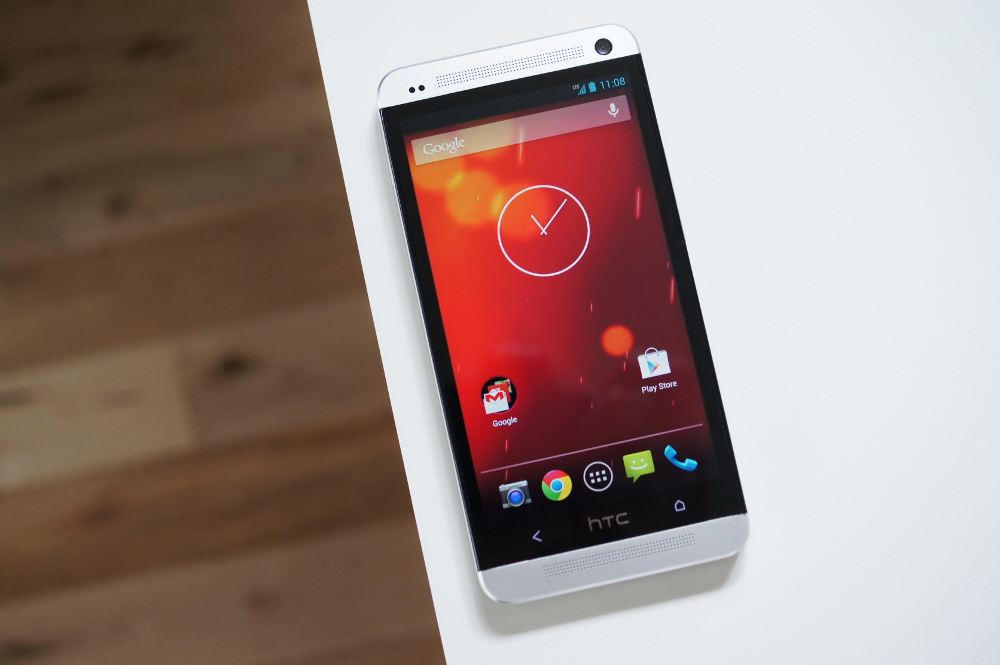

If I look back through all of the years we have covered Android, it’s hard to argue that the introduction of Google Play Edition phones wasn’t one of the biggest moments. In those early years, the Android skin situation was bad. Those early versions of TouchWiz, MotoBlur, and even HTC Sense, weren’t what many of us wanted, to say the least. We wanted Google’s version of Android, as well as their Nexus update schedules, yet that was tough to get because Google was making average hardware at the time.
While Google Play Edition may have failed as a program, I get the feeling that Android One will now act as a proper replacement to it.
A little Google Play Edition history
When the Galaxy S4 and HTC One Google Play Editions arrived in June 2013, the Nexus 4 was still available. While it was a fine phone with a pretty, sparkly backside, it had a less-than-stellar camera and lacked the biggest tech of the moment: LTE. Not only that, we all liked Samsung and HTC’s hardware and had long-dreamed of a phone that featured Samsung’s cameras and specs, HTC’s stellar metal bodies and speakers, and ran stock Android that was updated frequently. Google Play Editions gave us that.
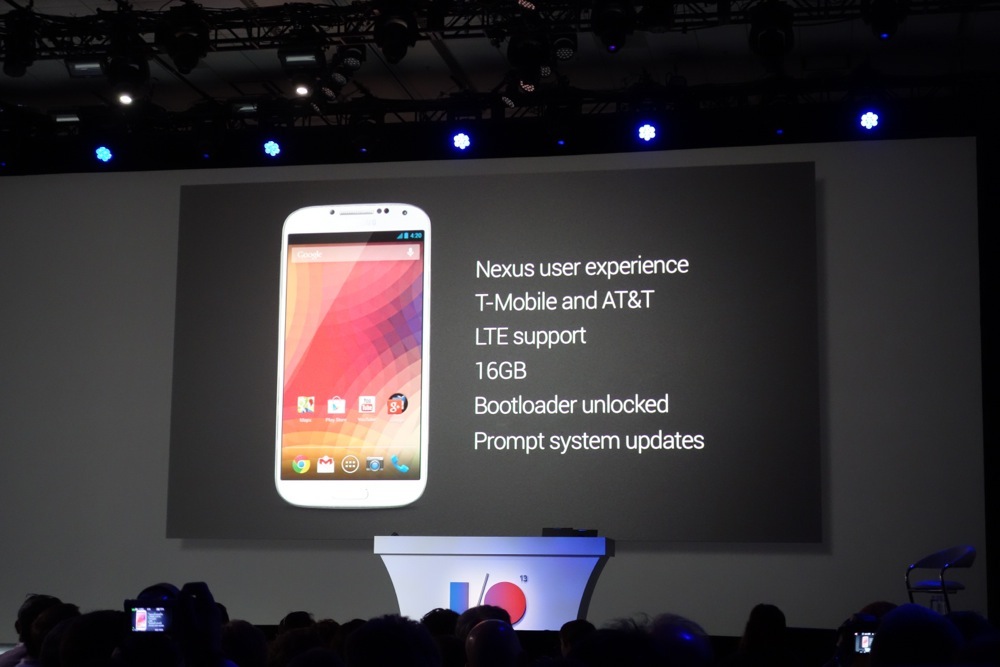
You may recall that when the Galaxy S4 Google Play Edition was announced at Google I/O, it was described as a “Nexus user experience” with noted LTE support, an unlockable bootloader, and “prompt system updates.” Those old Google Play Edition listings talked heavily about having the “latest version of Android from Google,” a “fast, clean user experience,” and Google’s apps package there in a carrier-free phone, so that you have a device that is yours to do what you want with. These were dream phones for Android purists.
Well, they were until Google killed the program not even two years later. I’m not sure Google ever truly acknowledged the GPE program’s death, we just assumed it wasn’t worth the hassle for everyone involved. By the time it ended, Google had helped bring its Android experience to others by splitting up Android into multiple parts to make its services more accessible to everyone, as well as update certain aspects through Google Play Services. But you also have to wonder if any of the partners truly bought in and saw the value in offering Google Play Editions.
Android One first arrives
During that short Google Play Edition life cycle, Google introduced another still-alive-today program called Android One. At the time, Google billed it as a platform for the “next five billion,” thanks to its accessible pricing. Android One phones were built on a reference design that could be updated frequently, run smoothly, and cost less. Google said specifically that Android One’s purpose was “to make high-quality smartphones accessible to as many people as possible” and that were “not just great to use, but also affordable.”
The Android One site used to reference those next billions of people as well. Even as late as last year, the Android One site was showcasing phones for Y! Mobile and talking about how “Android One devices feature best-in-class hardware for their price.”
Fast forward to today and that’s all changed.
The big, budget switcheroo
Hiroshi Lockheimer said in a blog post today that they created Android One for three reasons: “faster access to the latest Android OS updates and Google innovations, regular security updates, and an easy-to-use software design that’s intuitive and streamlined.” See anything missing there? He didn’t mention anything about pricing, affordability, or accessibility to billions of new Android users.
The current version of the Android One site has scrubbed all mentions of value or price. The focus of Android One today is about phones that run the “purest form of Android.” Google is calling Android One a platform that showcases “Android at its best.” Google talks about Android One having “everything you want” (all of Google’s services, not someone else’s) and “nothing you don’t” (no bloatware or obnoxious skin), as well as access to Google Assistant, Google Play Protect, and two years worth of updates.
It’s a lot like how Android One started out, but again, without the budget talk or that whole reaching the next five billion focus. And the budget talk has gone away because Android Go is here to fill that need. In fact, Android Go devices will first arrive next week at MWC, as well as news surrounding Android One.
Android Go devices will run a lighter version of Android with optimized Go apps that were built for devices we once saw kickstart the Android One program (those with lower specs, like between 512MB and 1GB RAM). Google is even acknowledging on the Go site that they need help of developers to make Go reach “the next billion.”
Android Go is what Android One first set out to be, which is fine.
First new Android One devices
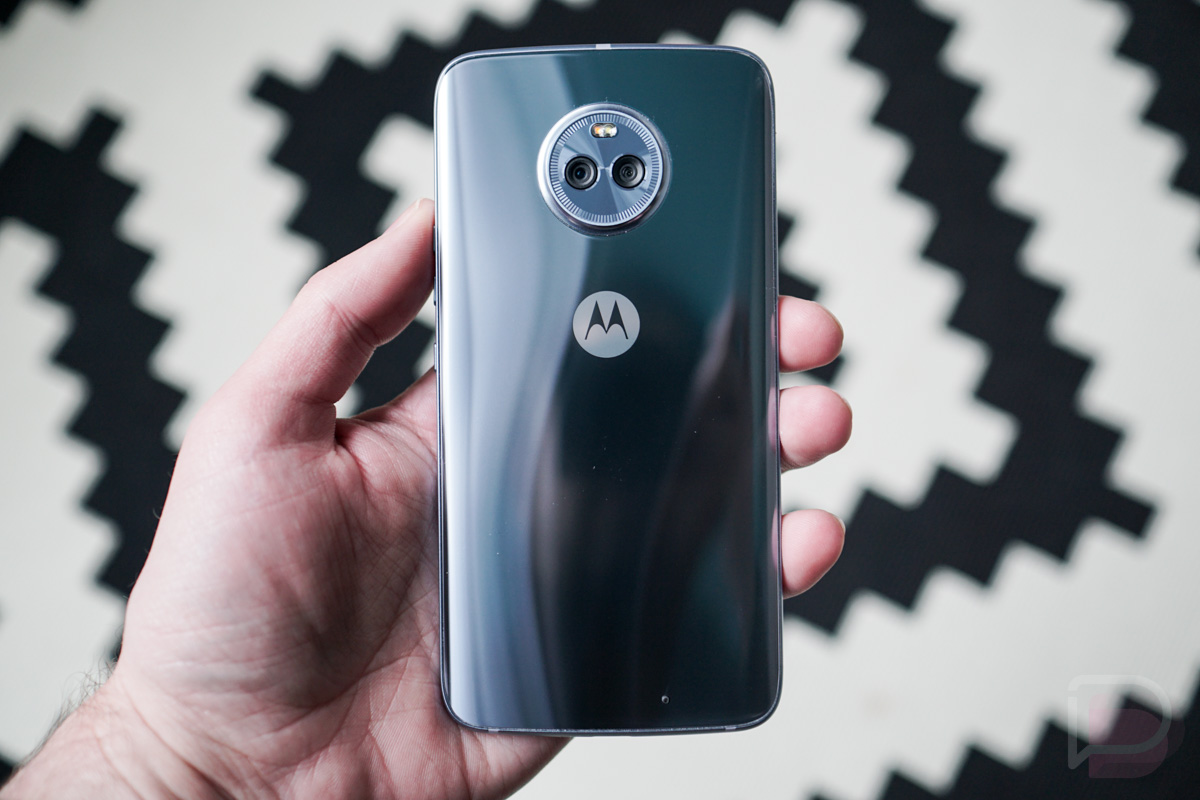
Last year, we saw the beginnings of this change in Android One as reports suggested the program’s phones would arrive for the first time in the US. Before the year ended, new Android One phones from partners you know, like the Xiaomi Mi A1, HTC U11 Life, and Moto X4 all launched in various countries. The difference with these phones and previous Android One phones was the fact that these weren’t ultra budget phones anymore. Sure, they aren’t $700, but they cost anywhere from $230 to $400, feature 3GB and 4GB RAM, higher-end processors, full HD displays, dual camera setups, and premium builds. By all means, these are phones anyone could enjoy, not just the next billion with $100 budgets.
And that sort of brings me back around to Google Play Edition phones. There was a range of devices in Google Play Edition, from the budget-friendly Moto G to the overpriced Sony Z Ultra and random inclusion of the LG G Pad 8.3. But the goal for Google Play Edition was the same as it is for Android One today: to give you the best Android experience.
Even better Android One phones must be coming
So what does all of that mean for the future? It appears that Android One is going to get an even bigger push into this new lifestyle in 2018. Lockheimer said today that “beautifully designed hardware from top partners” will continue to push Android One forward. New Android One devices are coming very soon.
The tricky part here is trying to figure out how far they’ll take Android One. Will they get close to the level of phones that were in Google Play Edition? Will the program tack on a high-end phone like the Galaxy S9 or maybe the LG V30 (2018 Edition)? Google sure is close with HTC – do we get a flagship-level phone from HTC as a part of this program?
My guess is that we will see just that. I don’t know who is going to make it or who the partner will be, but it’s clear that Android One is Google’s latest attempt to push their version of Android with their services front and center. The way you get that in front of more people is by reaching all budgets. They are currently in both low (Mi A1) and mid tiers (U11 Life, X4), so that only leaves an obvious next tier.

Why now, though?
That’s a tough question to answer. Why did Google Play Editions fail or why did Google kill the program? Again, we don’t know the exact reason. What we do know is that Android still has an update problem to this day, something both Google Play Edition and Android One have solutions for. Is another push behind Android One the way to help fix that? If only it were that easy. But with most Android manufacturers struggling these days to sell phones outside of Samsung and Huawei, maybe it makes sense that players like HTC, LG, and Motorola take on Google’s version of Android through Android One with Google helping out on updates. Rather than spending the time and resources it takes to update custom Android skins to the latest versions of Android, why not let Google do most of that work?
Look, Android manufacturers have argued that selling lots of Android phones can only happen through differentiation, often through software. Except, that doesn’t appear to be working anymore. Will running Google’s version of Android help fix that? I don’t know, but after years upon years of failing, why not give it a shot? Android One, the new Google Play Edition, might be that next shot.
Enter Nokia 6, 7 plus and 8 Sirocco. Big name android one devices are now here! Android one future looks bright!
Nice article with a comprehensive back story. I’ve become less and less willing to to with a Samsung phone simply because of the slowwwwww OS updates. I think security patches aren’t where they need to be for most manufacturers. Oreo is addressing that, but you gotta be able to be upgraded to Oreo. And many of the majors are doing a horrible job of rolling out the updates for their formerly high end phones. I’m talking about you HTC, LG, OnePlus, and Samsung, Yes, I know y’all have a beta or one or two stable OTA’s available, but what about the rest? Why should my two year old phone STILL be waiting for an Oreo update over 6 months after its release? I am unmoved by the technological/logistical challenges. It’s a flawed system and I applaud everyone’s efforts to fix that. I’ll leave the spec wars to others.
I would totally buy a phone in a Google Play edition if that were an option, hands down
Google Play is dead
The expansion of Android One likely coincides with the expansion of Project Treble with native Oreo devices.
Good lord, look at the bezels on that HTC One. I loved that phone and it was one of the two GPE devices I owned, but MAN does that design not hold up in 2018.
I’d call this less of an opinion, and more just solid reporting about a strategy change around android. Great read!
“We wanted Google’s version of Android”
What you mean “we” Kemosabe?
I legit miss my old Xperia z ultra
Hope it plays out this way. I used an HTC One Google Play Edition back in the day and liked it. The more close to pure Android phones we have out there the better in my book.
My guess is that when Pixel 3 gets announced in October, there will indeed be three handsets on offer. As is the rumor, two will be “high-end”, and one will be the “premium” phone. One of the “high-end” devices (with the lesser specs when comparing the two) will be available through Android One.
I remember converting my HTC One from Sense to Play Edition by flashing the ROM. Those days were glorious.
YES!! OMG that was so joyous – you got the killer hardware from the HTC and a stock Android experience. That was one of the sweetest moments of that phone.
Ah, yes, 2013, the good old days.
The problem is that even Android one devices take months to get the updates. Oreo only just arrived for xiaomi mi a1 last month, months after oreo was released by Google.
Because everyone assumes the updates come straight from Google, they don’t.
https://support.google.com/nexus/answer/4457705?hl=en https://uploads.disquscdn.com/images/a8b08ace93b43ea1ea4ce5306e07efccca03dd91dbafb0809ebe53dfecd2889c.png
So why have the program then?
Google is trying to get more people to use better supported (major OS/security patches) devices at every price range. Majority OEMs only update upper-mid and high end devices.
But one of the selling points is faster updates, which ain’t true
Why did Google Play Editions fail or why did Google kill the program?
Because there weren’t any payment plans at the time.
They never said. It just slowly fizzled.
Putting a chunk ton of money down all it once is a hard pill to swallow for a phone.
Since we’re speculating, I’d speculate that very few people outside of a portion of Android site readers wanted it. Which contradicts your “We wanted Google’s version of Android” unless by “we” you mean “Android writers and a portion of Android site readers”.
Did all of the GPE devices “fizzle” out on the same OS version? Or, for example, did more popular variants like the Moto G get updated longer than an oddball like the G-Pad 8.3?
Well written and thought out article, Kellen.
Thank you!
Isn’t this burying the lead that it seems the only way to actually buy an Android One phone in the US is subscribe to Fi?
If Google actually had a strategy with Android One to get pure Android into the hands of more people, these devices need to be easier to buy.
This 100%. If I wanted an X4 android one, I’d have to buy it used or get a Fi account and cancel after activation. Too much hassle at this point.
Not necessarily. I think the focus of the article is the change of Android One from $100 phones to phones from their premium partners that may no longer just be budget friendly. The availability is a part of it, sure, I didn’t address it because we know nothing outside of that one Fi device. I would *hope* that if Google is ready to really push Android One, it won’t be a Fi-only thing.
Also, going into possible availability would have added another 300 words heh.
Wow this clarified lots of stuff that was cloudy to me. “Android manufacturers have argued that selling lots of Android phones can only happen through differentiation, often through software. Except, that doesn’t appear to be working anymore.” Amen. Maybe they can focus on cool new hardware features or innovative form factors instead.
At this point, I’d rather they do that too. Let Google do software, while they focus on hardware. They need to try something else at this point, since most are struggling.
Rather than spending the time and resources it takes to update custom Android skins to the latest versions of Android, why not let Google do most of that work?
Seems someone has got a short memory.. Wasn’t that part of the initial promise of Android One?
100% yes. Which is what I’m arguing for still.
Problem is that 98% of Android users could care less about this. It’s not going to help sales and will eventually be another Google program memory.
If Google really cares about android smartphones being updates then it needs to his the bullet and start actually making smartphones. Turn that HTC mobile unit it bought into one that makes phones in every category (budget, midrange and premium) perhaps give these OEMs something to worry about
I think Google said they wouldn’t compete with its partners but when you have phones that won’t stop rebooting(LG) and phones catching fire(Samsung) you have to take over to protect you baby. The public will or try to link those as being issues with Android phones not Samsung or LG issues. That’s exactly how an iPhone user sees it, they will say “look another Android phone with issues.” Google is starting out like Apple did and have the phone only available from one carrier for the first 3 years then breakout and take over.
If they do get a high-end partner, I wouldn’t be surprised if LG is the first one to the plate. I’d love to see their hardware paired with a cleaner version of Android and quicker updates. Even if it doesn’t expand into the high-end, hopefully the Android One program becomes something great and provides options for users that want a near Nexus experience without paying Pixel prices.
I think LG is a good bet as well. They are already taking the mantle of the “high-end Amazon Prime handset” manufacturer and they have always positioned their flagships a notch or two below Samsung & Apple pricing. LG’s UI is such a disaster that they need to do a Motorola X circa 2013 and throw it all out and start fresh and/or go stock with a few key custom apps.
A lot of speculation in this article
Forgot the “opinion” flag. Meant to add that.
But yes, there is.
1,400 words later about Android One.
Anyone got a beer?
Had one, but I needed to drink it to get thru the article.
So, how about that Pixel 3 XL? ????
Just finished my coffee
Remember the Nokia 7+ leaked photo of the white and orange phone, it had AndroidOne Branding on the back. I think your right about all this Kellen.
I was thinking about this phone as I was reading the article. It looked like something I would consider if I wasn’t willing to spend on a Pixel 2.
I really do think Google has bigger plans for Android One than it has let on.
Dude, if you’re right.. the next round is on me!