


Earth Day is tomorrow and that means a moment to consider what you are doing to help this planet survive for not just our generation, but all that will come after us. Whether you want to go out and plant some trees, finally start recycling, eliminate awful plastic, or buy an electric car as a lifestyle change is on you, as it could bring a huge shift in your day-to-day being. If you’d rather go an easier route and let technology do the work for you, Google’s Earth Day sale isn’t a bad place to start.
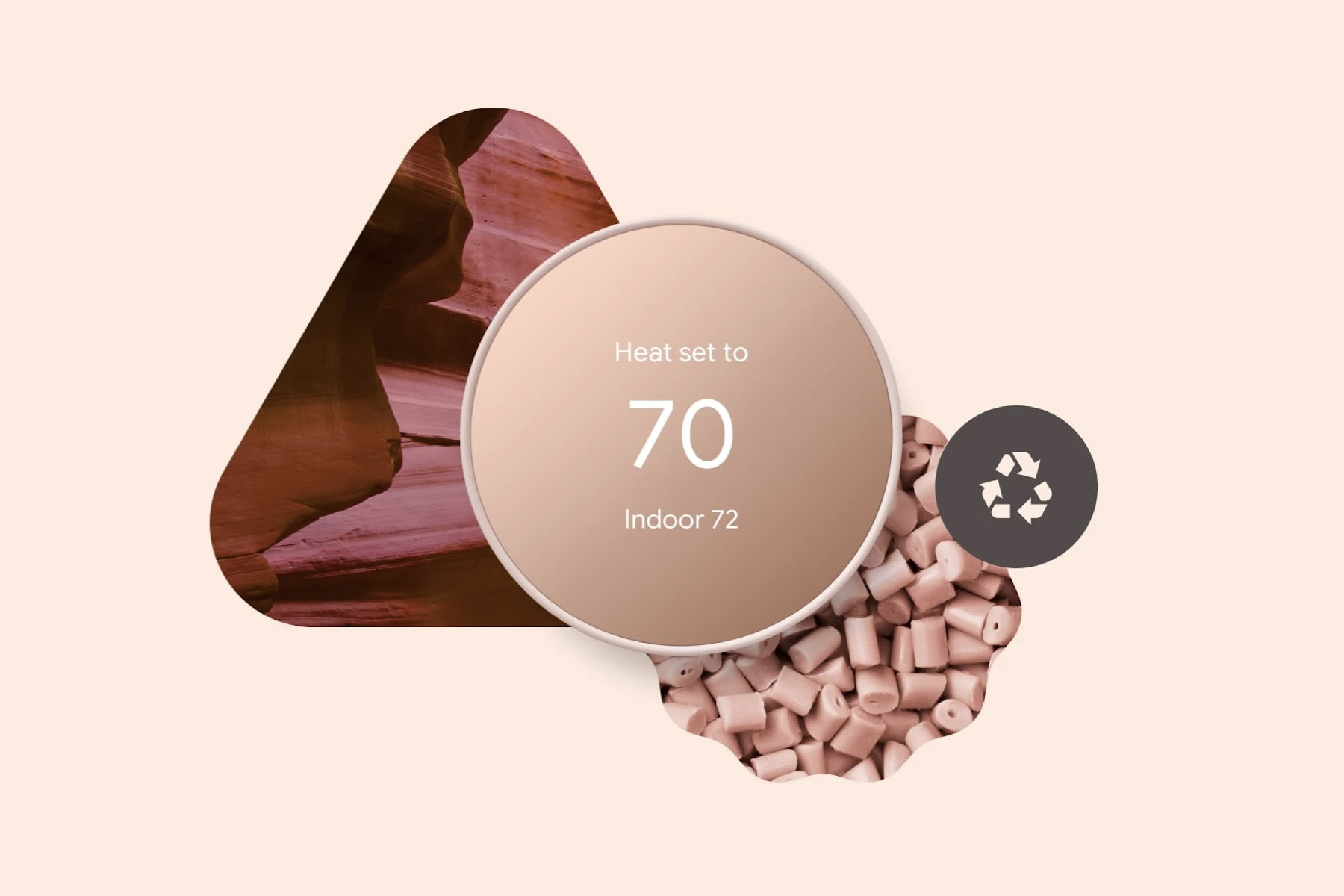
As an example, Google claims its smart thermostats have saved over 90 billion kWh of energy since 2011. That’s because they actively try to work at the proper time and make better use of energy to heat or cool your home. For most people, installing one takes a few minutes and then becomes one of the smartest parts of your home. I’ve been using one for a good decade now and absolutely love it.
The new Nest Thermostat is $30 off for Earth Day. The older Nest Learning Thermostat (2nd Gen) is $50 off.
Google also uses all sorts of recycled materials in their products, like 70% recycled plastic in the Nest Audio enclosure. Some of the new Nest Cams are made with up to 45% of recycled plastics. When you buy theirs instead of some other brand, you should at least know they are making them somewhat responsibly.
The Nest Audio is $30 off and down to just $69.99. Nest Cams start at $20 off, but you can get bundles of cameras up to $100 off.
The rest of Google’s smart home line-up is on sale too. You’ll find their new wireless doorbell at $30 off, the older wired doorbell at $80 off, new Nest Hub at $35 off, and Nest WiFi bundles up to $100 off. It’s all on sale, man.






I really wish they would add more “smart” features to the thermostats, such as the ability to switch modes depending on the ambient temperature. For example, I would like to have the thermostat switch from AC to Heat or fan only if ambient temperature drops below 65 deg. I’ve been told by my HVAC guy that running the AC when ambient is below 65 causes the compressor to wear out sooner due to the increased viscosity of the oils used to lubricate the compressor. In my opinion, these aren’t really “smart”, just slightly more featured than a standard thermostat. I’d say that for most smart home items; you just can’t use them in novel ways – at least not without a lot of extra effort like setting up home assistant.
Nest thermostats don’t do this? My ecobee does….if I’m understanding you correctly, I can set it to run heat or ac depending on temperature. So if it’s below 66 it will run heat, if it’s over 70 it will run the ac.
Amazing