

The Pixel 10a was announced by Google a few weeks back and the general response to it was, “This just seems like a Pixel 9a.” For the most part, it really is a Pixel 9a that has a couple of tweaks here and there, but it will be tough for most people to find meaningful differences. That doesn’t mean this won’t be a phone to consider, especially as Google and its retail partners look to sell through remaining 9a stock. Once that’s gone, this will be the mid-range offering from Google.
For those who missed it, the Pixel 10a is the newest A-series phone from Google that starts at $499 and tops out at $599. It has a 6.3″ pOLED display with a refresh rate from 60Hz to 120Hz, Tensor G4 processor, 8GB RAM, a 5100mAh battery with both wired and wireless charging, dual rear camera (48MP wide + 13MP ultra-wide), IP68 water and dust resistance, and an aluminum frame that has a flat back without camera hump. As far as hardware specs go, this phone is identical to the Pixel 9a.
The differences will come from software, but only via a couple of AI-related features that the Pixel 9a should be fully capable of doing at some point down the road. We don’t know if Google will ever give the 9a access, I’m just pointing out that since the hardware is identical, the software experiences could be too.
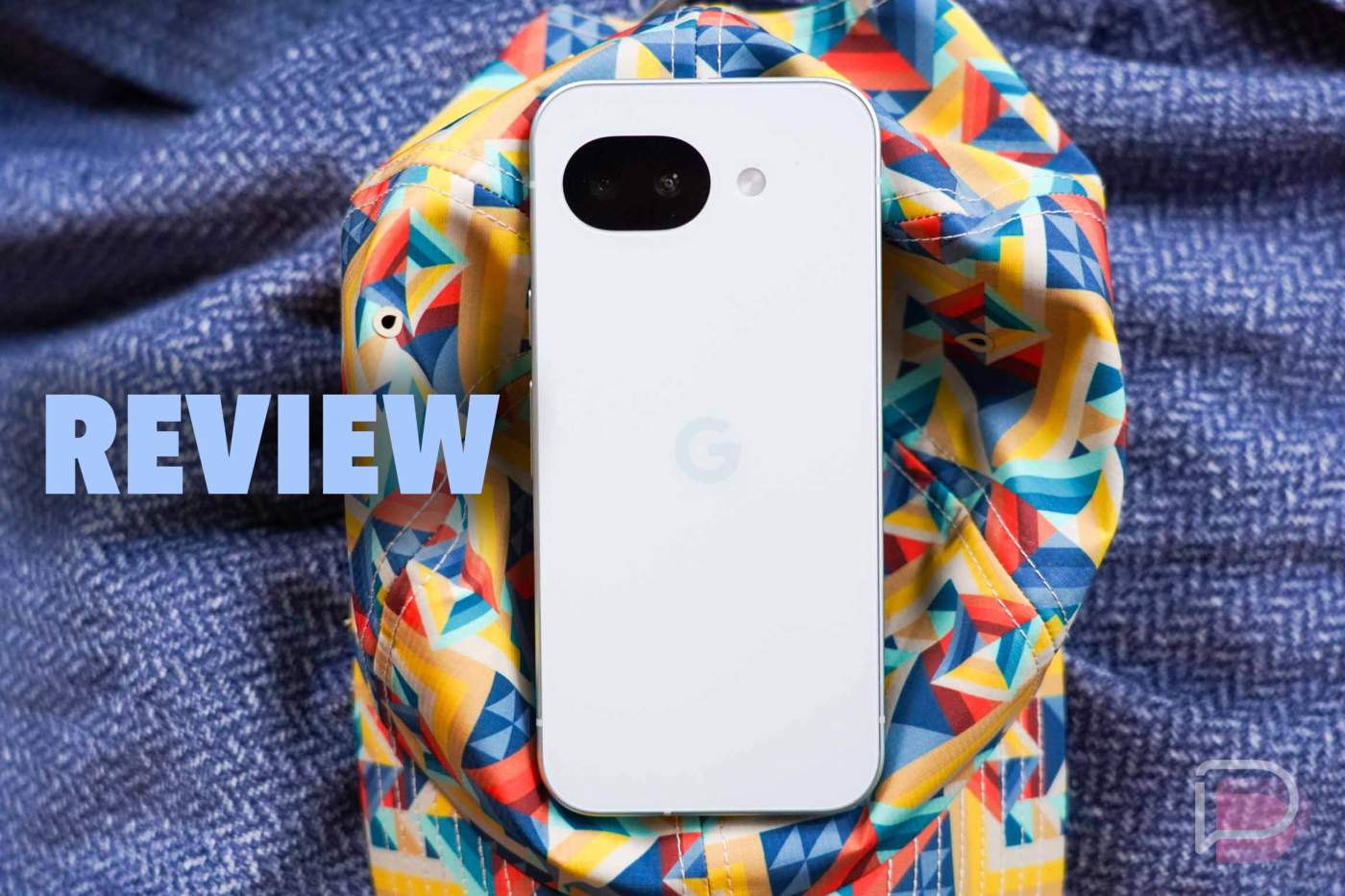
We’ve been testing the Pixel 10a in “Fog” and with 128GB storage for a full 2 weeks now. Let’s talk about if anyone should buy this phone. This is our Pixel 10a review.
What do I like about the Pixel 10a?
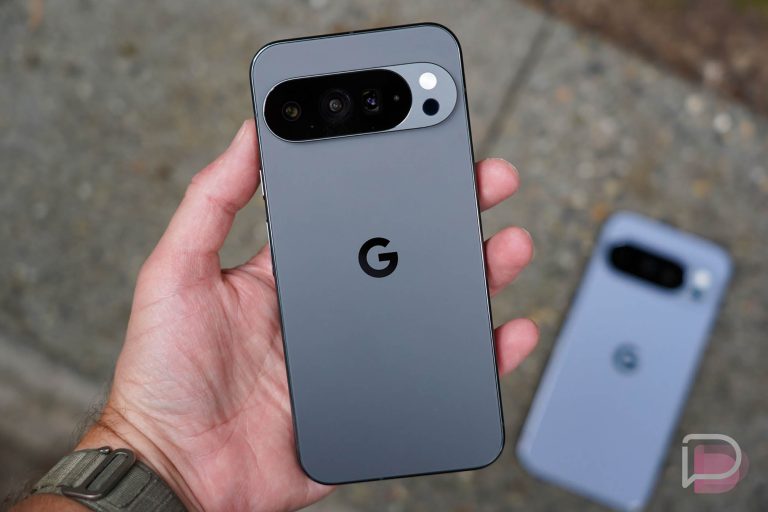
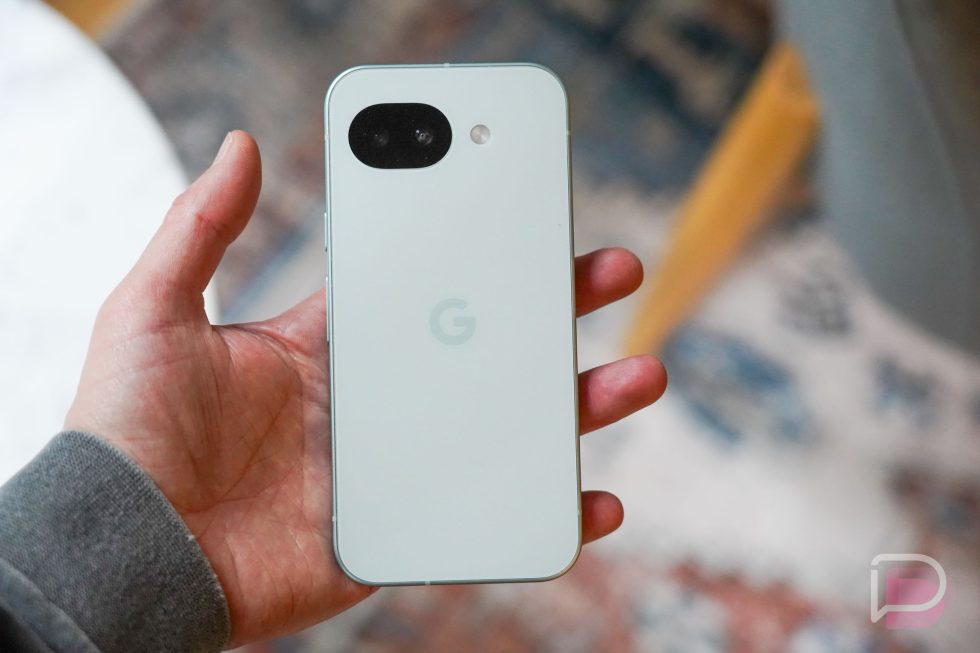
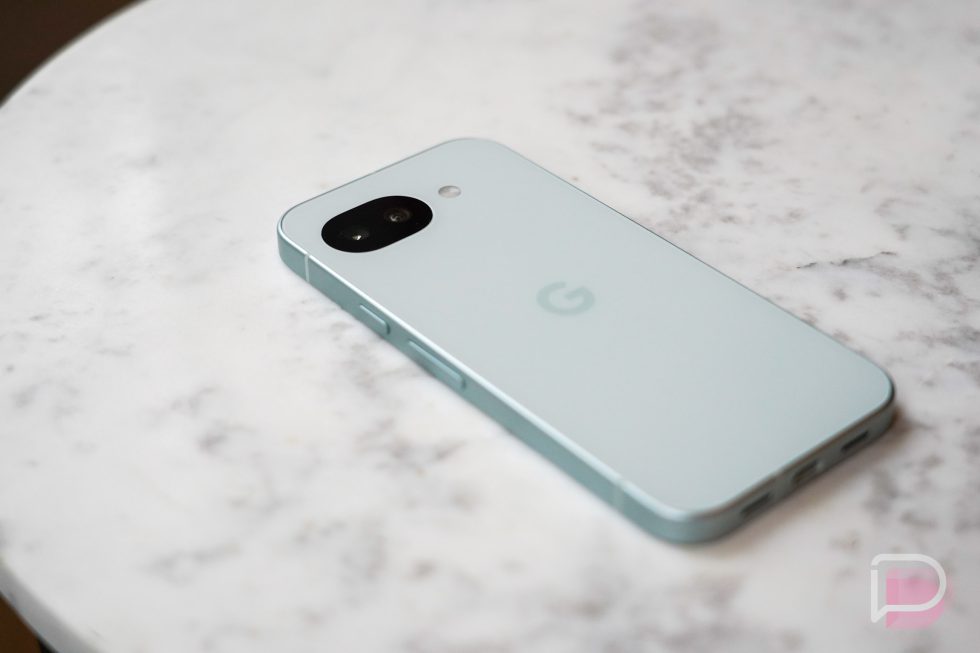
Design and hardware. Like the Pixel 9a before it, the Pixel 10a is a well-built phone without sharpness that’ll bite your hand. It has a flatness to it that makes it easy to grip, an incredible overall size that few phones can beat, a weight that makes it a delight to hold for long sessions, and a general feel that will make you believe this phone might cost more than you paid for it.
Google outfitted the Pixel 10a with an aluminum body and an upgraded Gorilla Glass 7i on the front and back, so this should be a more durable device too. You have super clicky buttons on the right side, a SIM slot on the left, a well-balanced bottom panel with speakers and USB-C port, and a display with uniform bezels all around. Sure, those bezels aren’t the thinnest, but this isn’t a flagship phone where you might care.
If there is one noteworthy hardware change over the Pixel 9a, it would be in the camera area. Google found a way to reduce the tiny camera bump from the 9a and left the Pixel 10a completely flat. You can slide a finger over the camera and it is as smooth as can be. The benefits to that are mostly that it lays perfectly flat when on a table and the chances of it getting caught when sliding in and out of a pocket or bag are slim.
Overall, the Pixel 10a is built in a way that allows it to punch above its price tag, yet remain unique and a device all its own.
Battery life. The Pixel 10a sports the same 5100mAh battery as the Pixel 9a, a device that I noted had “really great” battery life. The Pixel 10a matches that greatness in this category and is a phone that you will find difficult to drain.
I’ve put the Pixel 10a through my typical day for the past couple of weeks and it’s one of those devices that you end up not stressing about within a day or two. On my first full day of use, I topped out at 3.5 hours of screen on time and went to bed with 38% battery remaining. That’s not an overly impressive number, but it only got better from there. The next night ended up with similar usage numbers and a whopping 49% battery remaining at bedtime. Yesterday, after putting the final touches on this review and really hammering on the phone, I hit 5 hours of screen on time and the phone still sat with 31% battery. The more I’ve used the Pixel 10a, the longer it has lasted.
Now, in terms of charging, we do have “Fast charging” that can hit 50% in about 30 minutes time. During one charging session that I checked on every few minutes, I went from 25% to 93% in under an hour. The final 7% did take another 20 minutes, though. My max charging speeds at lower percentages topped out at around 27W. This phone also supports Qi wireless charging, but understand that it does not have Qi2 magnets like the other Pixel 10 phones.
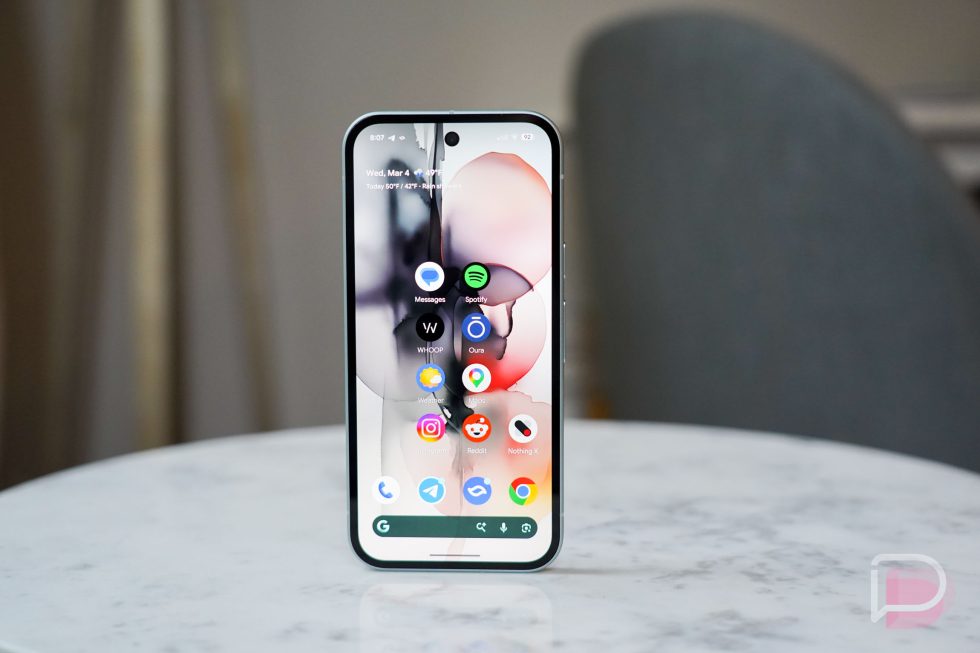
Software. Out of the box, the Pixel 10a ships with Android 16, but because this is a Pixel phone, it’ll see support for 7 years. During those 7 years, it’ll get updated to the latest versions of Android (like the upcoming Android 17 update) before any other device, it’ll see monthly security patches for the first several years, and Google plans to regularly provide new features by way of Pixel Feature Drops. Oh, don’t forget that you can always run whatever the newest beta software is too, which makes this a great phone for those who like to have the newest of the new and tinker.
When using the Pixel 10a, you get the Pixel software experience. This is a somewhat clean version of Android with all of Google’s newest ideas on top. This has Google’s Material 3 Expressive skin on top that is very colorful, playful, and unique. You get the Pixel Launcher, which might be showing its age with its lack of improvements and features. All of Google’s apps are here, there are plenty of sound and display settings to tweak, and the “Wallpaper & style” area really lets you customize the phone’s overall look to your liking.
Of course, there is Gemini at the ready and plenty of AI or smart features along for the ride. You can access Gemini Live, Circle to Search, Call Assist, Live Translate, and the Pixel Weather app. The camera has a Camera Coach, Add Me, Auto Best Take, and Top Shot, plus there are Google Photos editing features, like Magic Eraser.
Google is also including Satellite SOS support, VPN by Google, access to Quick Share to AirDrop, and several safety features, like Theft Protection, Safety Check, and Car Crash Detection. For the most part, this phone has what other Pixel phones have, outside of the Magic Cue stuff that the other Pixel 10 phones launched with.
I just like the Pixel experience, so I don’t really have complaints about the software on the Pixel 10a. This software looks pretty, has the right mix of features, will continue to get new features, and I know that I’ll get to play with the latest in Android by owning one.
Display is good enough. The 6.3″ Actua display that Google tossed into the Pixel 10a weighs in with a 1080p resolution and 60-120Hz refresh rate. It gets slightly bright at the peak with 3000 nits brightness, but other than that, this is basically the same display as the Pixel 9a.
You have excellent viewing angles, a low-end brightness that is perfect for late night sessions, a color profile that is more muted than offensively punchie, and a really nice dark theme. It’s quick to respond, although I wouldn’t necessarily call it the fastest phone I’ve used recently. There is a touch sensitivity setting called “Increased sensitivity” that is supposed to “Make your screen more responsive to lighter touches” and I actually think it works. Once I enabled that, I really noticed a quicker display that was so much more enjoyable to use.
It’s auto-brightness is also a bit aggressive at the wrong times and Google has enabled an obnoxious behind-the-scenes feature that will shorten your screen timeout time without telling you. But otherwise, this isn’t a solid budget display that’s smooth during most uses, gets bright enough and dark enough, and should have more protection than the Pixel 9a, thanks to Gorilla Glass 7i.
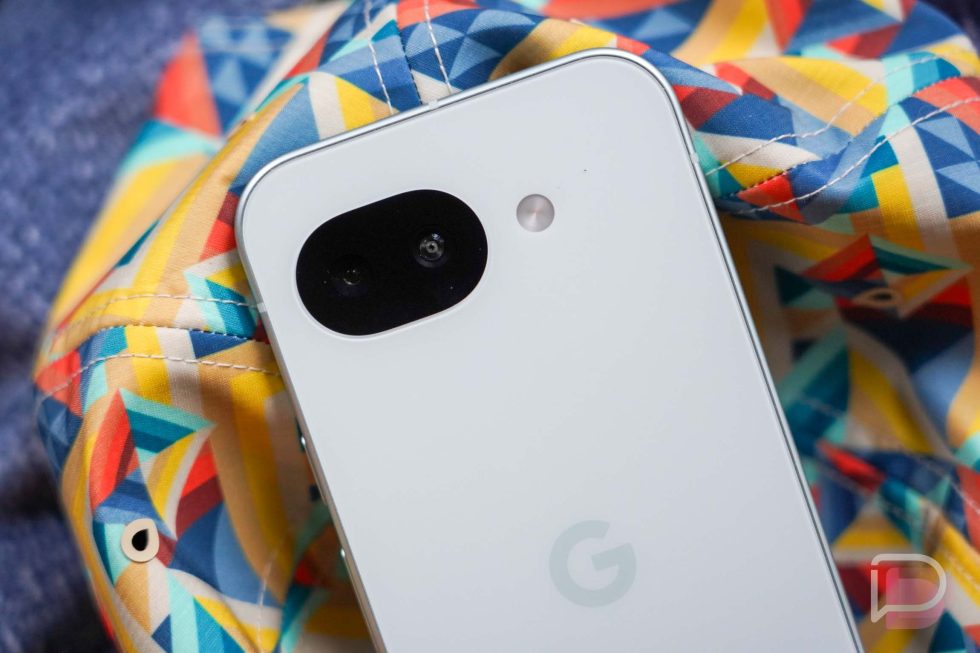
Camera. The cameras in the Pixel 10a match those in the Pixel 9a, so that means a 48MP main sensor next to a 13MP ultra-wide camera. There’s nothing exceptional about this camera system, but it should get the job done in most situations.
This camera isn’t always the quickest thing to load, but once it does, you can snap off pictures in a hurry. This thing, once opened, is a quick little camera that should help you capture your dog or kids and not miss many shots. It utilizes Google’s excellent camera app with controls that make sense and enough settings to let you act somewhat professional.
The images this camera produces are certainly on the more natural side. Google isn’t ramping contrast as hard as some other cameras I’ve tested recently, has kept images a little warmer and possibly flatter, and isn’t going too nuts with shadows. It’s portrait mode is a bright spot, like with most Pixel devices, indoor shots are often crisper than you expect, and it’s landscape shots look more realistic or true-to-eye than other mid-range cameras that I can’t currently name-drop (soon!). A good way to describe this camera would be balanced. This camera is basically doing the minimum it needs to in order to let you feel confident in it.








Anything to be concerned about?
Performance is just OK. The Pixel 10a runs the same Tensor G4 chip with 8GB RAM as the Pixel 9a. In my 9a review, I mentioned that the performance was “good enough,” but with this phone in 2026, I’d possibly lean towards the performance being close to not good enough. I say that because I’ve spent the majority of the last year with phones that are incredibly fast and smooth, like the OnePlus 15, Galaxy Z Fold 7, Pixel 10 Pro, and iPhone 17 Pro. Going from those phones down to this makes it instantly clear that this is a budget phone.
What I mean by that is that the Pixel 10a has noticeable hiccups here and there. Apps do stutter at times. Games certainly don’t hit the same frame rates you come to expect. And sometimes the camera is just a touch slower to load after a break than you might want. At this price, I don’t think performance is going to matter to most people and it’ll be fine. Just know that this phone isn’t going to shock you with its smoothness and will instead more than likely remind you here and there that it is a $500 device.
I also have to point out this display / lock screen wake-up issue. I’m really hoping this is a bug that can be fixed, but this phone struggles at times to wake properly. You can pull it out of your pocket and the display refuses to acknowledge touches. So that means the fingerprint reader doesn’t work, tapping the display won’t wake it, and you’ll have to physically click the side buttons to force the phone awake, which then allows for normal usage. But this has been happening since I took the phone out of the box and I hope Google can find a fix for it.
Should you buy the Pixel 10a?
Recommending the Pixel 10a is pretty easy. This is a well-made phone with a good mix of specs, solid hardware, and great software that will only cost you $499. Google almost always discounts its phones too, so you really shouldn’t ever pay that much for it.
Should you buy it if you own a Pixel 9a or if you are out shopping and there’s a Pixel 9a sitting next to it? Absolutely not. This is a phone you buy if you are on a budget and coming from a Pixel 8 or older phone, have ditched iOS and want to sample the Pixel life, or have decided it’s time to move on from Samsung and don’t want to break the bank with a Pixel 10 Pro. But this phone is no different than the Pixel 9a, so if you see a 9a and it’s on sale with a big discount, you pull the trigger on that first.
This is a phone that is well worth its $499 price and quickly becomes a steal when Google discounts it, which they will. It’s a good phone even it’s not bringing anything new to the table.
- Shop Pixel 10a deals: Amazon | Google Store