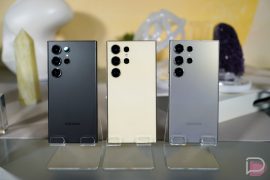
Bootloaders in general had a tough day today – or should I say the security departments behind them. Dan Rosenberg went ahead and published “Loki,” his tool for helping developers flash custom kernels and recoveries on the Galaxy S4 variants of Verizon and AT&T. It’s not a full bootloader unlock tool (“bootloader itself is untouched”) like we saw with a handful of Motorola devices, but it is a positive sign for the dev crowd. There isn’t a tool that can be used to do anything at this time – you’ll instead have to wait for your favorite ROM dev to use Loki in their next release.
Bootloader Bypass Tool Released for Verizon and AT&T Galaxy S4, DROID DNA Sees S-OFF Too
Galaxy S4 Software Differences: Verizon vs. AT&T
With the Verizon version of the Samsung Galaxy S4 (quick overview) now in hand, along with its step-brother on AT&T, we decided to take a look at the software each is running to see if there are any major differences. Since Samsung is now releasing one phone in one size on all carriers, with identical specs (at least in the U.S.), we don’t have to worry about comparing hardware. These devices are identical in physical form outside of a logo here or there. But software can certainly differ from one carrier to the next – we have seen that with the Note 2 and even Galaxy S3.
So what’s different? Let’s look.
AT&T Announces Exclusive Aurora Red Galaxy S4, Pre-orders Start May 24
CellMaps Mobile Shows You Carrier Network Coverage Areas, Lets You Compare
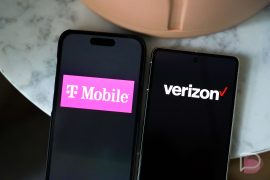
Over the last year or so, we’ve talked a lot about switching carriers. With policy changes frustrating consumers, tiered data hampering usage, and phones not being offered across the board on all carriers, there may not be a better time than now to consider a move. One downside to moving, though, is the worry of coverage with a new carrier not being equal to what you were previous receiving. The last thing you want to do is commit to a new carrier, only to find that your phone can barely hold a signal at home or that LTE won’t be in your neighborhood for years.
Verizon Ups Data Limits on New Prepaid Plans, Likely in Response to Competitors
Back on February 1, Verizon introduced a new set of prepaid plans that were laughable, to say the least. These new plans started at $60, which would get you unlimited talk and text along with 500MB of data. The second tier landed you the same unlimited benefits, but only 2GB of data for $70. Keep in mind that neither is capable of connecting to Verizon’s nationwide 4G LTE network and are instead stuck on their insanely slow 3G CDMA network. Also, prepaid offerings from companies like SmartTalk offer unlimited talk, text, and data for as little as $45 per month on HSPA+ networks.
AT&T Blocking Video Calls Through Google Hangouts Over Mobile Data
Yesterday, Kellen and myself got back to the hotel and immediately started messing around with Google’s new Hangouts app. While attempting to make a video call over mobile data on AT&T’s network, we got the following message, “You must be connected to a Wi-Fi network to join a video call.” Well, that’s a downer.
Specs for the Motorola “XFON” XT1058 Appear in Benchmark: 720p Display and Dual-core Snapdragon S4 Processor
The “XFON” from Motorola is no longer much of a secret now that it has been both pictured and found cruising through the FCC. It’s the phone you are seeing above that leaked months ago, at least all signs point to that being the case. While Motorola could easily have some tricks up its sleeves for this device that will “wow” us in the end, current info from a recent GFXBench benchmark pegs this device as a mid-range Android handset.
HTC First aka “Facebook Phone” Reportedly Already to be Discontinued
Just a little over a month ago, Facebook held a press event in Menlo Park at their headquarters to announce a partnership with HTC and AT&T. The child of that partnership was the HTC First, priced at just $99 and the first device to come pre-loaded with Facebook Home. While Home was met with mixed reviews from the media and consumers, the First itself didn’t seem all that bad. Beneath Facebook’s launcher lays a vanilla Android operating system, with mid-level specs inside of a well-designed body. According to sources of BGR, none of it was good enough to keep the device on shelves for even a few months.